Thank you! Your submission has been received



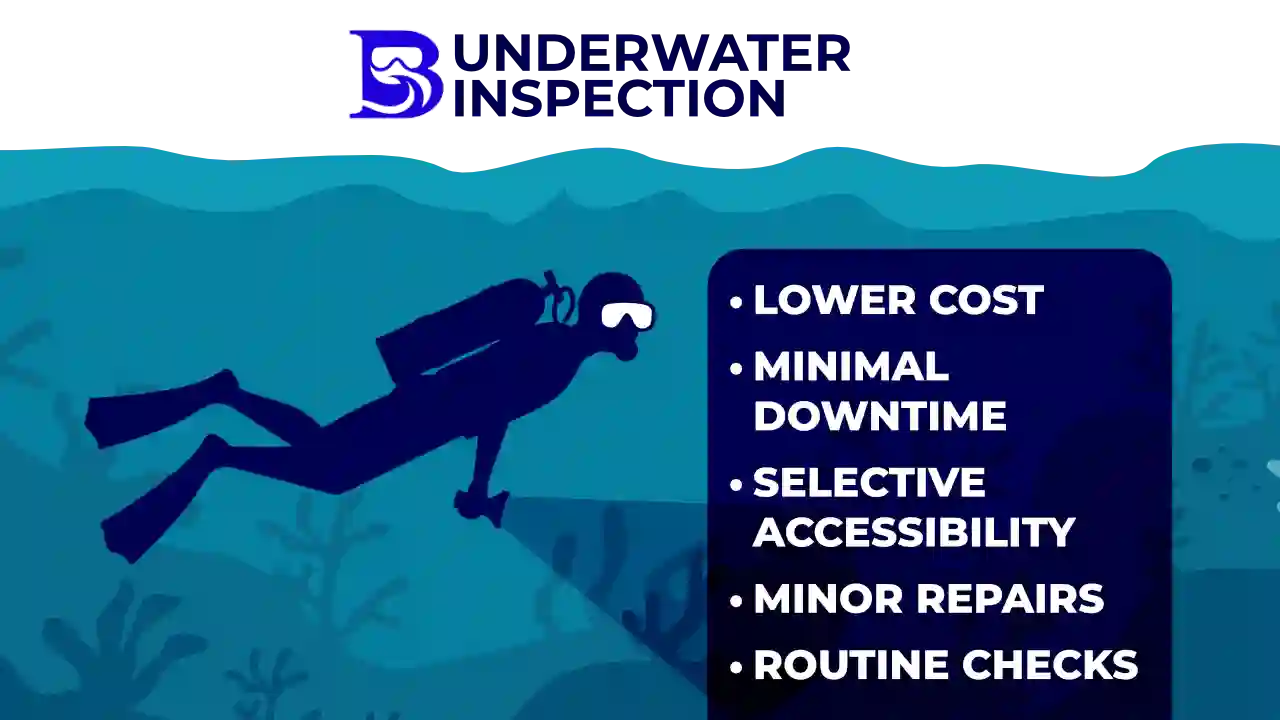
In today’s maritime industry, efficiency, safety, and cost control are critical for vessel operations. One of the most essential services supporting these goals is subsea inspection—a process that allows shipowners to assess the condition of their vessels without the need for costly dry docking.
🌊 What is Subsea Inspection?
Subsea inspection refers to the examination of underwater structures and vessel components while the ship remains in the water. This is typically carried out by certified commercial divers or remotely operated vehicles (ROVs).
The goal is to identify:
Structural damage
Corrosion and coating deterioration
Marine growth (biofouling)
Mechanical issues affecting performance
Unlike traditional inspection methods, subsea inspection allows shipowners to gather critical data without interrupting operations.
⚙️ What Does Subsea Inspection Cover?
A professional subsea inspection service includes several key areas:
🔹 Hull Inspection
Detect cracks, dents, or corrosion
Assess coating condition
Identify biofouling buildup
🔹 Propeller and Shaft Inspection
Check for blade damage and cavitation
Evaluate polishing condition
Ensure optimal propulsion performance
🔹 Sea Chest and Valve Inspection
Inspect intake systems for blockage
Detect corrosion inside critical components
🔹 UWILD (Underwater Inspection in Lieu of Dry Dock)
Class-approved inspection method
Allows vessels to remain operational
Supports compliance with international standards
🔹 Photo and Video Reporting
High-resolution underwater imaging
Used for analysis, reporting, and class submission
🎯 Why Subsea Inspection is Important for Shipowners
✅ 1. Reduces Dry Dock Costs
Dry docking is expensive and time-consuming.
Subsea inspection helps:
Identify issues early
Perform maintenance without removing the vessel from service
Extend intervals between dry dockings
👉 Result: Significant cost savings
✅ 2. Minimizes Vessel Downtime
Time off-hire means lost revenue.
With subsea inspection:
Work is done while the vessel is afloat
Inspections can be scheduled quickly
Operations continue with minimal disruption
✅ 3. Improves Vessel Performance
Marine growth and damage directly affect efficiency.
Regular inspection ensures:
Clean hull surfaces
Optimized propeller condition
Reduced drag and fuel consumption
👉 Result: Lower operating costs and better performance
✅ 4. Ensures Safety and Compliance
Shipowners must comply with classification societies and safety standards.
Subsea inspection helps:
Detect potential risks early
Maintain structural integrity
Meet regulatory and class requirements
✅ 5. Enables Preventive Maintenance
Instead of reacting to failures, shipowners can take a proactive approach.
With routine subsea inspection:
Problems are identified before they worsen
Repairs can be planned strategically
Asset lifespan is extended
⚖️ Subsea Inspection vs Dry Dock Inspection
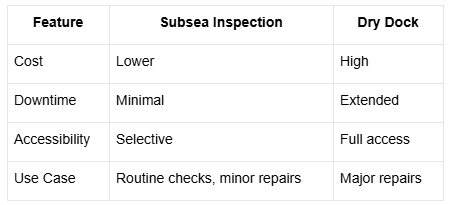
✅ Best strategy: Use subsea inspection regularly and reserve dry docking for major overhauls.
🌐 Why Subsea Inspection is Essential in the Philippines
The Philippines is one of the busiest maritime regions in the world, with heavy vessel traffic and tropical waters that accelerate marine growth.
For shipowners operating in this environment:
Biofouling develops faster
Maintenance must be more frequent
Inspection needs to be efficient and accessible
👉 Subsea inspection offers the ideal solution for maintaining vessels in Philippine waters.
💡 Choosing the Right Subsea Inspection Provider
To maximize results, shipowners should work with a provider that offers:
Certified and experienced commercial divers
Advanced underwater inspection equipment
Fast mobilization across Philippine ports
Detailed reporting and documentation
Strong safety standards and compliance
🛠️When Should You Schedule Underwater Services?
Shipowners should plan underwater services:
As part of routine maintenance
When fuel consumption increases
After long voyages
Following grounding or impact
Before regulatory inspections
Waiting until problems worsen often leads to higher costs and downtime.
📌 Why Choose Blue Deep Marine Services?
At Blue Deep Marine Services, we don’t just inspect—we deliver complete underwater services tailored to your vessel’s needs.
What sets us apart:
Expert commercial dive teams
Advanced inspection and repair equipment
Fast response time across operations
Detailed reporting and compliance support
Cost-effective solutions without dry docking
We help shipowners move from reactive inspection to proactive underwater maintenance.
🌟Final Thoughts
Subsea inspection is an essential process—but on its own, it’s not enough.
Shipowners who want to stay efficient, compliant, and profitable should focus on integrated underwater services that combine inspection, maintenance, and repair in one solution.
By choosing a trusted provider like Blue Deep Marine Services, you ensure:
Better vessel performance
Lower operating costs
Reduced downtime
Long-term operational reliability